
Sun Protection Importance!
How and When to Use Sun Protection

When it comes to sun protection, it’s crucial you use sunscreen correctly. This isn’t as simple as throwing some on in the morning and going about your day, but it’s not complicated either. Read on for a rundown of how to use sunscreen to get the best results.
- How much sunscreen is enough? When applying (or reapplying) sunscreen, it’s important you use the correct amount. Dermatologists recommend applying about one shot glass—or 1.5 ounces—of sunscreen for your body and an additional teaspoon for your face. If this seems like a lot, that’s because it is. Most people under-apply sunscreen, ending up with uneven and partial coverage.
- When should I reapply sunscreen? Regardless of your sunscreen’s SPF rating, you should reapply it at least every two hours. If you go for a swim, reapply when you get out of the water. And if you’re sweating heavily, be sure to reapply your sunscreen more frequently as your sweat may wash it off of your skin. Mineral sunscreens offer immediate protection, but it’s a good idea to wait 30 minutes after applying chemical sunscreens before heading back into the sun.
- When should I wear sunscreen? If you’re going to be in the sun at all, it never hurts to wear sunscreen. Many skincare and cosmetics companies offer low SPF products (usually around 15 SPF) designed for daily use. And if you’re planning to be in the sun for a longer period of time (30 minutes and up) or rplan to be out when the UV index is the highest (between 10 a.m. and 2 p.m.), it’s a good idea to apply sunscreen that’s at least 30 SPF. Oh…and don’t forget to reapply every two hours!
Sunscreen Myths and Misconceptions
In today’s world sunscreen is widely available and commonly used. But there are still a number of myths and misconceptions that need to be cleared up.
One of the most common sunscreen myths is that it actually causes sunburns and increases damage to your skin. There’s not any evidence to support this claim, but there is a possible explanation as to why people might think this way. And it all comes down to not using sunscreen correctly. Here’s the situation: when people wear sun protection, they sometimes feel it enables them to disregard other sun-exposure best practices. They stay out for hours without wearing protective clothing or reapplying sunscreen. As discussed, it’s absolutely vital to reapply sunscreen at least every two hours. So in this case, sunscreen is not causing sunburns but it is leading to riskier behavior.
This takes us right into another myth about sunscreen: anything over SPF 50 is actually bad for you. Again, there isn’t any evidence to support this conclusion. Researchers have observed the same pattern of riskier behavior from those who apply a higher SPF sunscreen. Even if you are wearing 75 SPF sunscreen, it needs to be reapplied every two hours o
- Do not burn
- Avoid Sun tanning and tanning beds
- Generously apply and reapply sunscreen
- Wear protective clothing
- Use extra caution around water, snow and sand
- Seek shade
- Check the UV Index
Exposure to UV radiation is a major risk factor for most skin cancers. Sunlight is the main source of UV rays. Tanning lamps and beds are also sources of UV rays.
Even though UV rays make up only a very small portion of the sun’s rays, they are the main cause of the sun’s damaging effects on the skin. UV rays damage the DNA of skin cells. Skin cancers start when this damage affects the DNA of genes that control skin growth.
Different Types of UV Rays:
- UVA Rays – age skin cells and can damage their DNA. These rays are linked to long-term skin damage such as wrinkles, but they are also thought to play a role in some skin cancers. Most tanning beds give off large amounts of UVA, which has been found to increase skin cancer risk.
- UVB Rays – have slightly more energy than UVA rays. They can damage skin cells’ DNA directly, and are the main rays that cause sunburns. They are also thought to cause most skin cancers.
- UVC Rays – have more energy than the other types of UV rays, but they don’t get through our atmosphere and are not in sunlight. They are not normally a cause of skin cancer.
Factors that Increase the Risk of Damage:
- History of skin cancer
- Family history of skin cancer, especially melanoma
- Have many moles, irregular or large
- Have freckles and burn before tanning
- Have fair skin, blue or green eyes, or blonde or light hair
- Spend a lot of time outdoors
- Have certain autoimmune diseases, such as SLE or Lupus
- Take medications that lower or suppress your immune system.
- Have had an organ transplant
- Take medications that make your skin more sensitive to sunlight
Sunscreen Don’ts:
- Don’t buy sunscreens with oxybenzone or vitamin A
- Don’t use a spray sunscreen
- Don’t buy sunscreens with high SPFs
- Don’t use tanning oil
- Don’t trust waterproof claims
Waves Aesthetics Recommended Products:
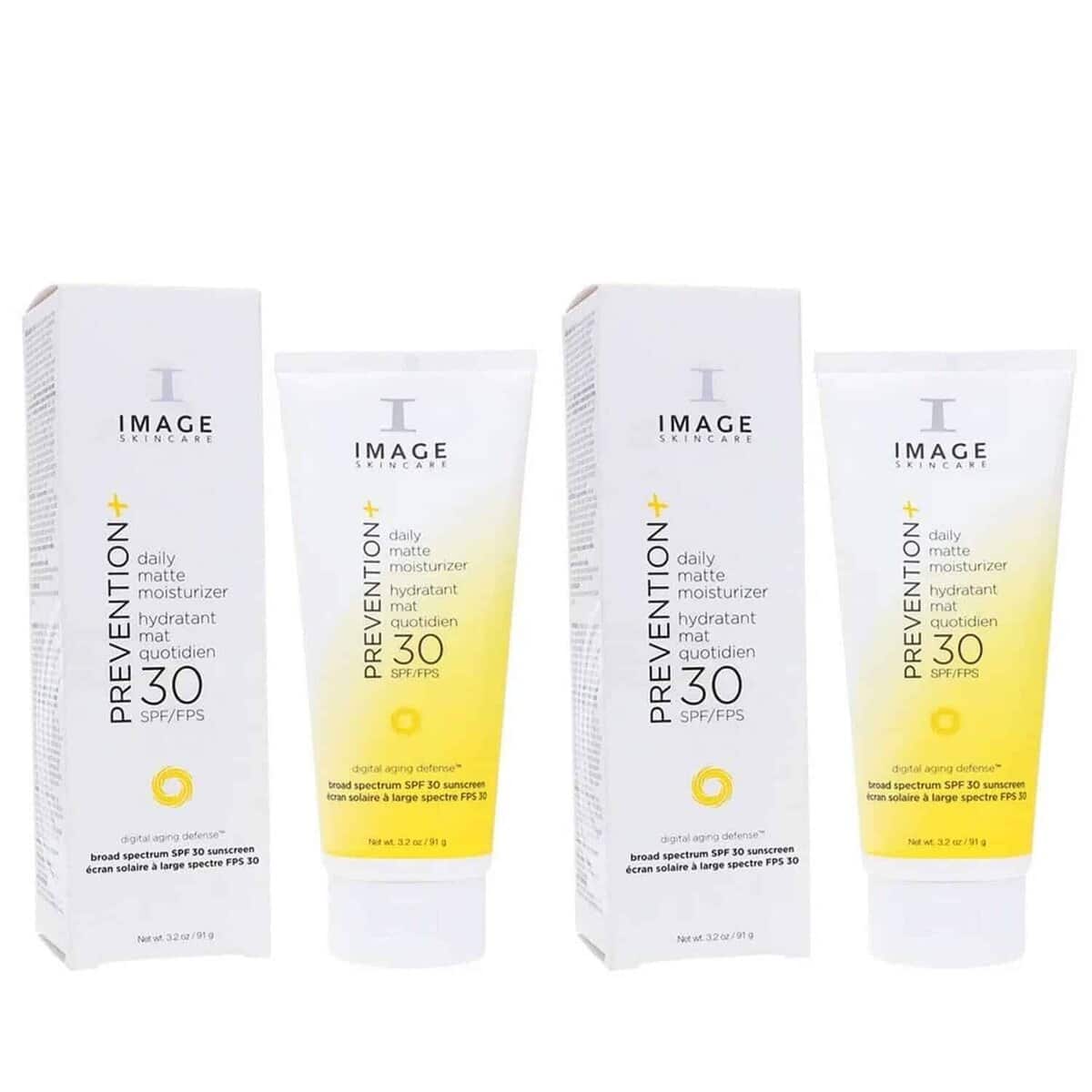
- Image Daily Moisturizer with 30 SPF
[fluentform id=4]